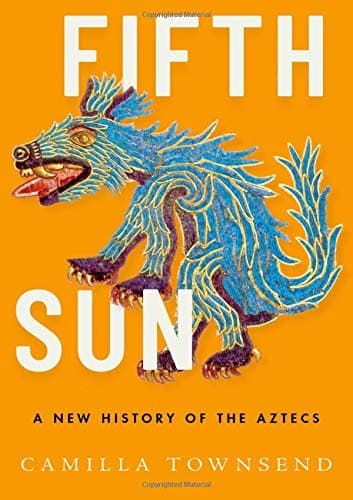
The end of the world of the Fifth Sun
An excellent modern history of the 'Aztecs' - with the author clearly at pains to even use that label, explaining its inaccuracy as she does with so many other commonly believed myths about these fascinating peoples.
Both the history and the narrative here are very impressive. The author succinctly explains the decisions made to make the book both accessible to lay people, and accurate to the new data. The recent breakthroughs in understanding the Nahuatl language spoken at the time are the bedrock of the 'new' history. It's a story written by the locals, some of whom were there at the time of contact with the Spanish, or were directly told by people who were. It is a new point of view, lost in plain sight for centuries. This is combined with the oral histories of their peoples written down at the same time.
She creates a strong narrative from this data. It stays true to its point of view, not becoming a tale of Cortez or the Spanish once their writings become accessible - they are used as condiments not the main dish. I was left saying "but what happened to Cortez!?" at one point, slipping back into the traditional story, missing a lot of the point. We have the history of the Mexica, mostly shared myth, then their better documented rise from wandering warriors for hire to top of the local system, ruling from their impressive self built capital city Tenochtitlan.
The complex local system is well explained and provides many answers to questions about how a few hundred Spaniards were able to wreak such havoc. Firstly, they had a lot of help from the enemies of the Mexica. Both other clans, and some crucial individuals, none more so than Malintzin/Malinche Cortez's interpreter, later lover, and famed Mexican 'traitor' who is recast here in a fair light. She was a survivor, an incredibly bright and industrious woman sold into slavery who had a chance at a better life, especially for her children.
Her story is symptomatic of all of the peoples of the area. The worst aspect of contact was disease. There were several truly devastating epidemics. Though the political order and local way of life did not change that much, the Spaniards, indeed aided by horses, war dogs, and most of all steel were not there to wipe them out but to take over as hegemons. It was an extractive exercise, brutal at times, but it was a slow process. Peoples in the countryside decades later may have never seen a Spaniard. The local elites were demoted, but used by the Spanish. This is in stark contrast with the methods used further North, here it was slow destruction of the peoples by any and all methods.
Explored here in the excellent "Journey of Humanity" https://www.goodreads.com/review/show/4699911286?type=review#rating_493847946 or here in fictional form by Dee Brown - https://www.goodreads.com/review/show/2598265259?book_show_action=false&from_review_page=1.
The local way of life is vividly portrayed, both before and after conquest. It is very different to the societies we live in, fascinating. My only little issue is that it could have been more lurid, more brutal. The author does not hide from the gore of human sacrifice or the desperate battles, but she does not revel in it either. On the podcast "History on Fire" I get that. Lots of cannibalism, human sacrifice, dogs eating people. As a proper historian I'm sure she wanted to avoid sensationalism but I am looking for it here!
Should be a first stop for anyone wanting to understand the 'Aztecs'!